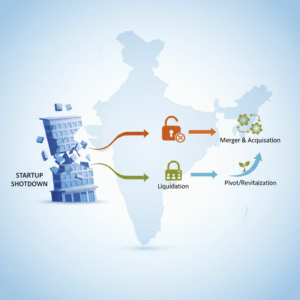


Did you know that nearly 40% of Indian companies attempting closure face unexpected holdups? From my experience, that is a very real number. If you are an entrepreneur aiming for a smooth company dissolution, it is essential to understand the realities surrounding the Strike Off Timeline in India. I have personally seen how unanticipated obstacles can drag out this process, causing frustration and potential problems. Let us examine the typical timeframe, analyze common reasons for delays and identify ways to accelerate the process.
Typical Timeframe for Company Strike Off
The Ministry of Corporate Affairs (MCA) provides two main methods for striking off a company. The first is through Section 248 of the Companies Act, 2013, a voluntary strike off. The second uses the Fast Track Exit (FTE) mode. Each has its own timeline, which can vary depending on the company’s situation.
Voluntary Strike Off (Section 248)
Businesses often choose this option when they want to voluntarily shut down. Here is a look at the usual schedule:
- Board Resolution: The process starts with a board resolution approving the strike off request. This should take about one to two weeks.
- Application Filing (STK-2): After board approval, an application using Form STK-2 is sent to the MCA. This involves preparing documents and getting the needed approvals. Plan for two to four weeks to complete this.
- Public Notice: Once filed, the MCA issues a public notice asking for any strike off objections. This notice appears on the MCA website and in a major newspaper. A 30 day period for objections follows.
- MCA Scrutiny: After the objection period ends, the MCA carefully reviews the application and any objections received. This may take two to three months.
- Strike Off Order: If approved and no significant objections arise, the MCA issues an order removing the company’s name from the Register of Companies. Expect this to happen one to two months after the review.
As a result, the whole process can take about four to seven months, assuming there are no big problems.
Fast Track Exit (FTE) Mode
The FTE mode offers a faster route for inactive companies to remove their names from the registry. To qualify, companies must meet requirements such as having no assets or debts. The schedule is as follows:
- Application Filing (STK-2): Form STK-2 is sent to the MCA.
- Public Notice: The MCA sends out a public notice to invite objections.
- MCA Scrutiny and Order: The MCA reviews the application and then issues the strike off order.
The FTE mode could shorten the Strike Off Timeline in India to three to five months. Note that the eligibility rules are stricter.
Factors Contributing to Strike Off Process Delays
Several things can slow down a company’s strike off. Knowing these factors helps avoid potential issues.
- Incomplete or Incorrect Documentation: A major cause of delays is submitting documents that are incomplete or wrong. The MCA demands precise and thorough information.
- Objections from Creditors or Other Stakeholders: Objections from creditors, employees or other stakeholders will lead to an MCA investigation, which could greatly lengthen the process.
- Pending Litigation or Legal Matters: Open lawsuits or legal issues may cause the MCA to postpone strike off approval until these are resolved.
- NonCompliance with Statutory Requirements: Not following legal rules, like filing annual returns on time or keeping correct accounting records, can create delays.
- MCA Workload and Processing Time: The MCA’s capacity and how long it takes to process applications also affect the timeline. Bottlenecks can occur just from the large number of applications they must handle.
Some delays cannot be avoided. However, companies can take steps to speed up the Delay in Company Strike Off Process and make the strike off smoother.
- Verify Complete and Accurate Documentation: Check all documents closely before submitting them. Make sure they are complete, accurate and consistent. This includes the application form, board resolution, affidavits and financial statements.
- Address Potential Objections Up Front: Identify possible objections from creditors or other stakeholders and deal with them early. This might mean negotiating settlements or providing assurances.
- Resolve Pending Litigation or Legal Matters: Prioritize settling any ongoing lawsuits or legal problems.
- Comply with Statutory Requirements: Follow all legal requirements carefully. File annual returns on time and keep detailed accounting records.
- Engage with the MCA: Keep in touch with the MCA. Respond quickly to all questions or requests for information.
- Hire Experienced Professionals: Think about hiring experienced professionals. Company secretaries or chartered accountants can offer guidance during the strike off and help prevent mistakes. I have seen many companies benefit a lot from this.
Comprehensive Document Checklist for Strike Off
To reduce delays, confirm that the following documents are ready and accurate before submission:
- Form STK-2 (Application for Strike Off)
- Board Resolution authorizing the strike off
- Affidavit from directors confirming the end of operations
- Indemnity bond protecting against any losses after the strike off
- Statement of Accounts, certified by a Chartered Accountant
- Special Resolution (if applicable)
- NOC from regulatory authorities (if applicable)
Illustrative Case Studies
To show how these factors matter, consider these examples.
Case Study 1: Company A
Company A sent in a strike off application too soon, before making sure the documentation was complete. The MCA asked many questions, requiring several resubmissions. The strike off took over nine months.
Case Study 2: Company B
Company B proactively handled potential creditor objections by negotiating settlements before formally applying for strike off. The company also met all legal requirements. As a result, the strike off was completed in just four months.
These cases demonstrate how careful preparation and management can speed up the strike off. I constantly emphasize to my clients how important it is to keep detailed financial records. Even small errors can add weeks or months to the total time.
The Role of a Company Secretary
A Company Secretary (CS) is extremely helpful in navigating the strike off. Their specialized knowledge helps with compliance and reduces errors. A CS assists with:
- Document preparation and filing
- Fulfilling legal requirements
- Liaison with the MCA
- Addressing inquiries and objections
Using a CS can make the strike off simpler and reduce delays.
Conclusion
For business owners seeking efficient company closures, understanding the real Strike Off Timeline in India and the main reasons for delays is vital. By ensuring thorough and accurate documentation, proactively addressing possible objections and carefully meeting all legal duties, companies can greatly speed up the strike off and lower potential complications. The process might seem complex, but careful planning and execution lead to a smoother and faster result. Active involvement and expert advice are critical differentiators.