
Here is a harsh truth: around 90% of new businesses fail. The allure of being your own boss often crashes headfirst into the cold, hard reality of turning a profit. No matter how hard people try or how good their intentions, sometimes a young company simply cannot sell enough to stay afloat. If you are facing the tough call to close an Indian startup that has not brought in any money by 2025, it is critical that you understand all your choices and meet every legal requirement. I have seen this happen many times. My goal here is to lead you through a closure process that keeps you on the right side of the law.
Pinpointing Why Revenue Dries Up
Before getting into the closure itself, let us think about the biggest reasons why a startup might not make any money. These often include:
- Bad Market Math: A wrong or skewed take on how much demand there actually is for what you are selling.
- Running Out of Cash: Not being able to get enough money to keep the business going and fund marketing.
- Fat Where It Should Be Lean: Spending too much to run the business, which eats into any possible income.
- A Sea of Sharks: Too much competition from big, established companies and other startups all fighting for the same customers.
- Rules of the Game Changing: Unexpected shifts in what the government requires, which hurt the business model.
Spotting these potential problems beforehand can give future founders the insight needed to avoid similar disasters. The failures of others can be powerful lessons.
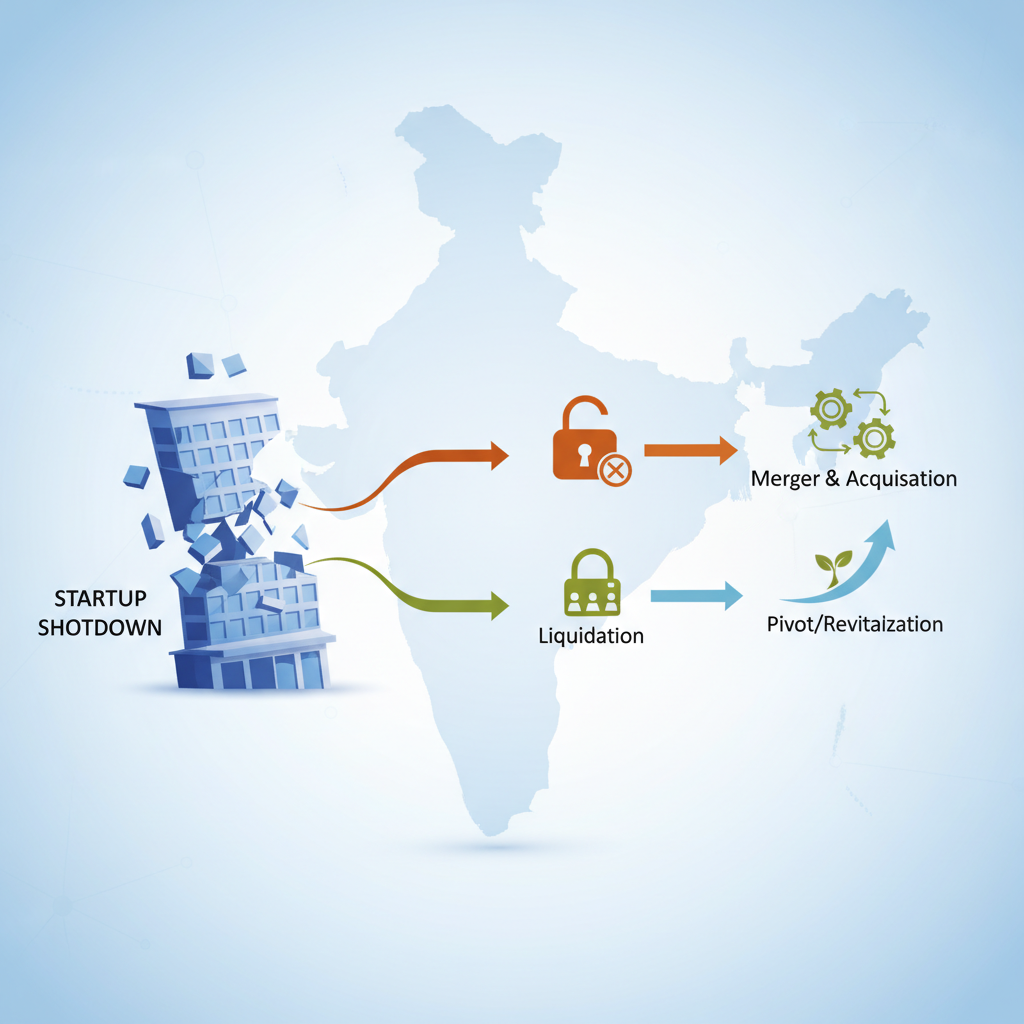
Startup Shutdown Options in India
When thinking about the best way to shut down a startup in India that has not made any money, several paths are available. Each choice has its own set of rules and effects.
1. Removing the Company Name (Section 248 of the Companies Act, 2013)
This way is often seen as the easiest and cheapest way to close a startup that has no valuable items and no debts. Let us look at the details:
- What You Need: The business must not have started doing business within a year of being created, or it must have stopped doing all business for the past two years without becoming a dormant company.
- How It Works:
- Send a formal request to the Registrar of Companies (ROC) using Form STK 2.
- Get official approval from most of the company’s leaders.
- Prove that all required payments have been made and cleared.
- The ROC will then post a public notice in the official government record and on its website, giving people a chance to object.
- If no one objects, the ROC will officially take the company’s name off its list.
- Good Points: Quick and does not cost much.
- Bad Points: Does not work if the company has valuable items or debts. Leaders must sign agreements to protect against loss.
I recall advising a small tech company that had built an app that no one wanted. They chose to remove the company name. The most important thing was carefully documenting that they had not been active and proving that all their paperwork was up to date. This made the process much simpler.
2. Fast Track Exit (FTE) Method
The Fast Track Exit (FTE) method is another option for dead companies that want to be removed from the official list of companies. India’s Ministry of Corporate Affairs created this process to speed up closure for companies that qualify.
- What You Need: The company must be officially dead, meaning it has not been doing any business for at least a year before applying. Also, the company must not have any valuable items or debts.
- How It Works: Send Form FTE to the Registrar of Companies. The ROC will then check the request. If it is happy with it, the ROC will post a notice on the MCA website, asking for objections. If no major objections arise, the company’s name will be erased from the official list.
- Good Points: Faster than the usual shutdown steps.
- Bad Points: Only certain companies can use it.
3. Winding Up (Liquidation)
Winding up means selling off the company’s valuable items to pay off debts and then giving any items left over to the shareholders. This is more involved and takes longer.
- Types of Winding Up:
- Voluntary Winding Up: Started by the company’s shareholders.
- Compulsory Winding Up: Ordered by a court.
- How It Works:
- Choose a liquidator to watch over and run the winding up.
- Turn the company’s valuable items into cash.
- Pay off all creditors.
- Give any remaining items to the shareholders.
- Get a court order to officially end the company.
- Good Points: Provides a clear system for handling valuable items and debts.
- Bad Points: Complex, takes a lot of time and costs money.
Given that the startup in question has no income and probably does not have many valuable items, winding up is usually the worst choice. If the company has large debts, this becomes a better option.
Key Things to Consider When Closing a Startup in India
Whatever way you choose, you must handle several important things during the startup closure:
- Following the Law: Carefully follow all the rules and laws, including the Companies Act, Income Tax Act and GST Act.
- Talking to Creditors: Keep open and honest communication with all creditors, paying off any debts quickly. Even if the startup is not making money, it might still have debts from running the business.
- Employee Separation: Provide fair separation packages to all employees who qualify.
- Keeping Records: Keep careful records of all actions and conversations.
- Shareholder Approval: Get all required approvals from the company’s shareholders.
Startup Closure Route Quiz
Answer these questions to find the best closure path:
- Has the company been inactive for the past two years? (Yes/No)
- Does the company currently own any valuable items? (Yes/No)
- Does the company have any unpaid debts or obligations? (Yes/No)
If you answered