
Did you know that a significant number of Limited Liability Partnerships, or LLPs, face termination each year? Officially dissolving an LLP, often termed a strike off, might initially seem overwhelming. Yet, comprehending the precise steps involved is essential. I will guide you through the necessary documentation, associated expenses and critical deadlines to ensure a fully compliant LLP closure, leading to a seamless and legally sound result. It is noteworthy that LLP closure rates have surged by 15% in the past five years, indicating that partnerships are indeed encountering challenges.
LLP closure, alternatively known as striking off an LLP, signifies the formal end of the partnership. The partnership’s name is then expunged from the Registrar of Companies (ROC) records. Do not confuse this with winding up, which constitutes a significantly more intricate legal procedure overseen by the National Company Law Tribunal (NCLT). Striking off represents a considerably less complex route for LLPs that are no longer in operation.
Generally speaking, an LLP is eligible for strike off when it fulfills the following criteria:
- The LLP has never commenced business operations since its inception.
- The LLP has remained dormant, that is inactive for a period exceeding one year.
Before you even consider initiating the closure, verify that your LLP satisfies all prerequisites. I have personally witnessed instances where failure to adhere to these regulations resulted in complications and protracted delays; outcomes that you certainly want to avoid.
The primary document required for an LLP closure is Form 24, formally designated as the “Application for striking off name of limited liability partnership, or LLP.” This form mandates extensive details pertaining to the LLP, its partners and the rationale behind the desired closure. Precision is paramount. I have encountered applications being rejected on account of minor errors.
The ensuing items must accompany Form 24:
- Statement of Account: A certified Statement of Account is requisite. A Chartered Accountant must validate the statement. The statement must substantiate the absence of assets or debts and must not predate the Form 24 filing by more than 30 days.
- Consent of Partners: Secure written consent from each partner. Their unequivocal agreement to the LLP closure is mandatory.
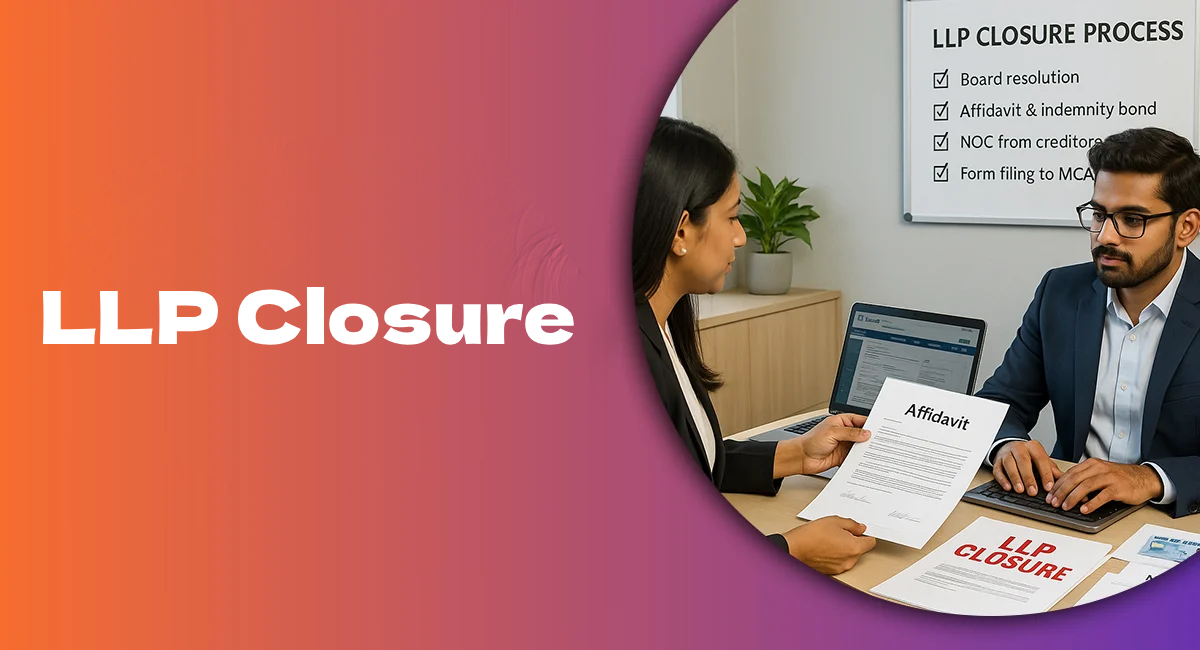
- Affidavit: Every designated partner must execute an affidavit. This affidavit must declare that the LLP either never initiated business operations or has ceased to operate.
- Indemnity Bond: All designated partners must execute an indemnity bond. This bond safeguards against potential debts or claims that may materialize subsequent to the LLP being struck off.
- Copy of Aadhar card and PAN card: Acquire self attested copies of the Aadhar card and PAN card for all designated partners. This serves identification purposes.
Focus intently on the preparation of your documents. This will substantially diminish the likelihood of your application being rejected. Confirm that all details align across all documents. Even inconsequential discrepancies can precipitate delays.
LLP closure encompasses a sequence of meticulous actions. Neglecting even a single step can potentially engender future complications.
- Secure Partner Consent: Convene all partners to deliberate the closure. Procure their formal written consent. Maintain comprehensive records documenting this agreement.
- Prepare the Statement of Account: Engage a Chartered Accountant to generate a statement affirming the absence of assets and debts. Ascertain that it is duly certified and correctly dated.
- Draft the Affidavit and Indemnity Bond: Compose both the affidavit and the indemnity bond. Adhere scrupulously to the prescribed format. Every designated partner must affix their signature to these documents.
- Submit Form 24: Electronically file Form 24 via the Ministry of Corporate Affairs (MCA) portal. Ensure all requisite documents are attached and scanned appropriately.
- ROC Review: The ROC will meticulously scrutinize the application. They may solicit clarifications or supplementary details. Respond promptly and accurately.
- Notice Publication: The ROC will issue a notice on the MCA website. This serves as a request for any objections to the proposed strike off.
- Final Strike Off: Assuming no objections arise, the ROC will expunge the LLP’s name from its registry and subsequently issue a dissolution notice.
Maintain open lines of communication with the ROC throughout the process. Expeditious responses and precise details will considerably expedite matters.
Currently, the filing fee for Form 24 stands at $5,000 INR. Remittance must be made electronically through the MCA portal. Factor this into your budgetary considerations.
Accountants and other professionals will levy fees for the preparation of the requisite statements and documents. These fees fluctuate contingent upon the specific circumstances and the professional’s rates. Ensure that these expenses are incorporated into your budget.
While direct government fees may not be exorbitant, earmark sufficient funds for professional services. This will contribute to a seamless and compliant LLP closure, an investment that is undoubtedly worthwhile.
The duration of LLP closure hinges on variables such as the completeness of your application, the responsiveness of partners and the ROC’s current workload. Here is a tentative timeline:
- Document preparation: Allocate one to two weeks.
- Form 24 filing: This typically requires one day.
- ROC review and notice publication: Anticipate two to three months.
- Final strike off: Allow an additional one to two months post notice publication.
Overall, budget for approximately 4 to 6 months. Bear in mind that this is merely an estimate and the actual timeframe may vary. Initiating the process well in advance of critical deadlines will mitigate potential delays. Starting early is invariably prudent.
The ROC reserves the right to reject your LLP closure application under the following circumstances:
- Form 24 contains erroneous or incomplete details.
- Requisite documents are absent.
- The LLP carries outstanding debts or liabilities.
- Creditors or other stakeholders lodge objections.
- There is noncompliance with the LLP Act, 2008.
I have observed instances where even trivial errors have precipitated application rejection. Double check everything and ensure complete compliance. Scrupulous attention to detail can avert significant problems.
Failure to adhere to the LLP Act, 2008, can engender penalties and even legal entanglements. Should an LLP persist in operating while noncompliant, designated partners may be held personally liable for its debts. Uphold all regulations to preclude this.
In light of the paramount importance of compliance, I strongly advocate seeking professional counsel to forestall potential legal ramifications. Consulting a professional will guarantee full compliance and afford you peace of mind.
Winding up constitutes a more formal and intricate method of dissolving an LLP compared to striking it off. It entails appointing a liquidator, disposing of assets, settling debts and distributing remaining assets to the partners. It represents a more substantial undertaking.
Winding up becomes necessary when the LLP possesses substantial assets or liabilities, or when partners are embroiled in disagreements. The NCLT oversees this process, which is more protracted than striking off. Expect it to take considerably longer.
Ascertaining whether to strike off or wind up necessitates a meticulous evaluation of the LLP’s financial status and any prevailing disputes. Obtain legal advice to ascertain the optimal course of action. This decision should not be undertaken lightly; ensure that you strike off LLP only when appropriate.
For an inactive LLP, closure through strike off can furnish a comparatively straightforward resolution. Provided you comprehend the requisite forms, fees and deadlines and you fulfill all regulatory mandates, you can dissolve your LLP and avert potential legal predicaments. I trust that this discussion has furnished you with the knowledge and assurance needed to successfully navigate the LLP closure process. When warranted, seek guidance from professionals to ensure seamless execution and sustained compliance. I extend my best wishes for your success.